
Products
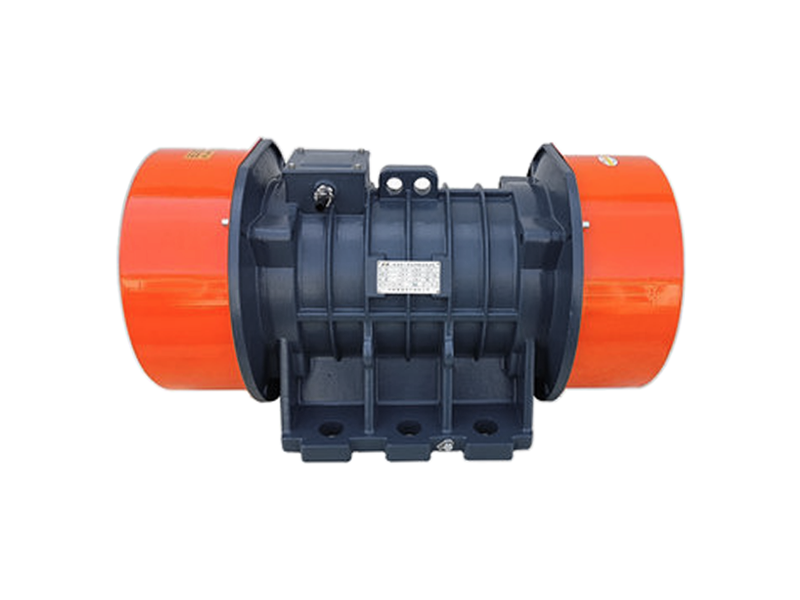


Vibration motor
Category:
Product Description

Vibration motor:
Vibration motors are the excitation sources of various types of vibration machinery, and vibration machinery equipment uses vibration motors as simple, reliable, and effective power.
Advantages:
Our vibration motor has a small volume, light weight, high excitation force, stable amplitude, stepless adjustment of excitation force, fully sealed casing, and can work under any dust condition without explosion-proof requirements.
Working principle:

A vibration motor is an excitation source that combines power and vibration sources. A vibration motor is a set of adjustable eccentric blocks installed at both ends of the rotor shaft, which utilizes the centrifugal force generated by the high-speed rotation of the shaft and eccentric blocks to obtain excitation force.
Application:
It can be applied to general vibration machinery, such as vibration crushers, vibration screening machines, vibration feeders, vibration packers, vibration shakers, vibration molding machines, vibration pile drivers, vibration elevators, vibration filling machines, vibration arch breaking and anti blocking devices for material silos, and so on. Widely used in industrial sectors such as hydropower construction, thermal power generation, construction, building materials, chemical industry, mining, coal, metallurgy, and light industry.
Welcome to inquire for more details.


The vibration motor can generate different vibration trajectories according to different installation combinations on the vibration body, thus effectively completing various tasks. The vibration motor mainly has the following operating trajectories:
Composite vibration:
The vibration of a vibrating body is generated by two sets of excitation systems, and its vibration form is called composite vibration. There are generally two forms: dual frequency composite and dual amplitude composite. Some special performance vibration screening equipment uses two vibration motors of different models and speeds, which are installed at the feeding and discharging ends of the screening machine, causing the feeding end to exhibit large amplitude and low frequency vibration, while the discharging end to exhibit small amplitude and high frequency vibration. The middle part of the screening machine overlaps two types of vibration, making the screening machine play a more effective screening role.
Rotational vibration:
The projection of the vibration trajectory of a vibrating body on a horizontal plane is a circle or ellipse, and its vibration form is called rotational vibration. Rotational vibration can be further divided into three forms: horizontal rotation vibration, vortex vibration, and compound rotation vibration. When the vibration trajectory of a vibrating body is projected onto a horizontal straight line on a vertical plane, its vibration form is called a rotational vibration; When the vibration trajectory of a vibrating body is projected as an oblique straight line on a vertical plane, its vibration form is called vortex type vibration; When the vibration trajectory of a vibrating body is projected into a circle or ellipse on a vertical plane, its vibration form is called compound rotational vibration. Usually, the vibration machinery excited by a vertical vibration motor generates rotational vibration, and its vibration form depends on the angle between the excitation blocks at both ends of the vertical vibration motor. Two horizontal vibration motors can also be installed on both sides of the vibration equipment, so that their rotating shafts are at a set angle, and the vibration machinery will also produce rotational vibration.
Circular or elliptical vibration:
The projection of the vibration trajectory of a vibrating body on the horizontal plane is a straight line, while the projection on the vertical plane is a circle or ellipse, and its vibration form is called circular or elliptical vibration. Usually, a vibration motor is installed on the body of the vibration machinery to generate this movement. Circular or elliptical vibration occurs on a plane perpendicular to the axis of the vibration motor, and its form depends on the relative position of the vibration motor and the center of gravity of the entire machine.
Linear vibration:
The projection of the vibration trajectory of a vibrating body on both the horizontal and vertical planes is a straight line, and its vibration form is called linear vibration. Install two vibration motors of the same model on the vibration machinery body, so that the two rotating shafts are in parallel positions. When the motor rotates in opposite directions, the two motors operate synchronously, and the body generates linear vibration.

Vibration motor:
Vibration motors are the excitation sources of various types of vibration machinery, and vibration machinery equipment uses vibration motors as simple, reliable, and effective power.
Advantages:
Our vibration motor has a small volume, light weight, high excitation force, stable amplitude, stepless adjustment of excitation force, fully sealed casing, and can work under any dust condition without explosion-proof requirements.
Working principle:

A vibration motor is an excitation source that combines power and vibration sources. A vibration motor is a set of adjustable eccentric blocks installed at both ends of the rotor shaft, which utilizes the centrifugal force generated by the high-speed rotation of the shaft and eccentric blocks to obtain excitation force.
Application:
It can be applied to general vibration machinery, such as vibration crushers, vibration screening machines, vibration feeders, vibration packers, vibration shakers, vibration molding machines, vibration pile drivers, vibration elevators, vibration filling machines, vibration arch breaking and anti blocking devices for material silos, and so on. Widely used in industrial sectors such as hydropower construction, thermal power generation, construction, building materials, chemical industry, mining, coal, metallurgy, and light industry.
Welcome to inquire for more details.
The vibration motor can generate different vibration trajectories according to different installation combinations on the vibration body, thus effectively completing various tasks. The vibration motor mainly has the following operating trajectories:
Composite vibration:
The vibration of a vibrating body is generated by two sets of excitation systems, and its vibration form is called composite vibration. There are generally two forms: dual frequency composite and dual amplitude composite. Some special performance vibration screening equipment uses two vibration motors of different models and speeds, which are installed at the feeding and discharging ends of the screening machine, causing the feeding end to exhibit large amplitude and low frequency vibration, while the discharging end to exhibit small amplitude and high frequency vibration. The middle part of the screening machine overlaps two types of vibration, making the screening machine play a more effective screening role.
Rotational vibration:
The projection of the vibration trajectory of a vibrating body on a horizontal plane is a circle or ellipse, and its vibration form is called rotational vibration. Rotational vibration can be further divided into three forms: horizontal rotation vibration, vortex vibration, and compound rotation vibration. When the vibration trajectory of a vibrating body is projected onto a horizontal straight line on a vertical plane, its vibration form is called a rotational vibration; When the vibration trajectory of a vibrating body is projected as an oblique straight line on a vertical plane, its vibration form is called vortex type vibration; When the vibration trajectory of a vibrating body is projected into a circle or ellipse on a vertical plane, its vibration form is called compound rotational vibration. Usually, the vibration machinery excited by a vertical vibration motor generates rotational vibration, and its vibration form depends on the angle between the excitation blocks at both ends of the vertical vibration motor. Two horizontal vibration motors can also be installed on both sides of the vibration equipment, so that their rotating shafts are at a set angle, and the vibration machinery will also produce rotational vibration.
Circular or elliptical vibration:
The projection of the vibration trajectory of a vibrating body on the horizontal plane is a straight line, while the projection on the vertical plane is a circle or ellipse, and its vibration form is called circular or elliptical vibration. Usually, a vibration motor is installed on the body of the vibration machinery to generate this movement. Circular or elliptical vibration occurs on a plane perpendicular to the axis of the vibration motor, and its form depends on the relative position of the vibration motor and the center of gravity of the entire machine.
Linear vibration:
The projection of the vibration trajectory of a vibrating body on both the horizontal and vertical planes is a straight line, and its vibration form is called linear vibration. Install two vibration motors of the same model on the vibration machinery body, so that the two rotating shafts are in parallel positions. When the motor rotates in opposite directions, the two motors operate synchronously, and the body generates linear vibration.
Previous:
Next:
Key words:
Message
Related products
Thank You for Your Attention to Nairy Machinery !
Please write down your requirement and contact details in the following form. You can also send a message to us by this email info@lynrjx.com, we will reply to you within 12 hours.

Luoyang Nairy Machinery Equipment Co., Ltd. (hereinafter referred to as Nairy) was founded in Luoyang, the Holy City of China. After years of innovation and development, Nairy products have made historic breakthroughs in the supply of sand and gravel system equipment and spare parts, the supply of belt conveyors, the research and development and supply of solid waste recycling equipment...
Company
Guohong Advanced Manufacturing Industrial Park, No. 18 Xiaowen Avenue, Yibin District, Luoyang City, Henan Province
Address
66 Longhua Avenue, Airport Industrial Cluster, Mengjin District, Luoyang City, Henan Province
©2023 Luoyang Nairy Machinery Equipment Co., Ltd. | Taglist | Business license
©2023 Luoyang Nairy Machinery Equipment Co., Ltd.